A commercial car wash equipment list should cover more than the main machine. Buyers also need to confirm pumps, chemical dosing, drying, controls, safety devices, water supply, drainage, water treatment, electrical infrastructure, installation scope and spare parts.
This guide provides a practical checklist for comparing automatic car wash quotations. Use the downloadable PDF to mark which items are included by the supplier, which must be provided locally and which still need confirmation.
A complete project is more than the wash frame alone. Compare quotations only after the equipment, local works and responsibilities have been aligned.
Commercial car wash equipment list at a glance
| Equipment area | What to confirm | Common responsibility question |
|---|---|---|
| Main wash machine | System type, exact model, frame or conveyor, wash stages and vehicle limits | What is included in the machine quotation? |
| High-pressure and brush systems | Pumps, motors, spray components, brushes where applicable and safety controls | Which configuration applies to this model? |
| Chemical and finishing systems | Dosing, foam, rinse, wax and required water quality | Are tanks, chemicals and interconnecting pipes included? |
| Drying | Blower quantity, rating, nozzle arrangement and electrical demand | Does the quoted package match the target cycle? |
| Controls and safety | Controller, HMI, sensors, positioning, emergency stops and alarms | Which interfaces and languages are supplied? |
| Water and drainage | Supply, storage, filtration, recycling, sediment control and discharge | Which items belong to the local contractor? |
| Electrical infrastructure | Voltage, phase, available capacity, protection, cabling and grounding | Is a transformer or local distribution upgrade required? |
| Delivery and installation | Packing, freight, unloading, installation, commissioning and training | Where does the supplier’s responsibility end? |
| Spare parts and support | Commissioning spares, operating spares, lead times and technical support | What should be stocked before opening? |
1. Choose the automatic car wash machine family
The first decision is the wash format. A commercial automatic car wash machine may be touchless in-bay, rollover brush, tunnel conveyor or a specialty system such as motorcycle washing. The correct format depends on the site, vehicle mix, target throughput, customer expectations and operating model.
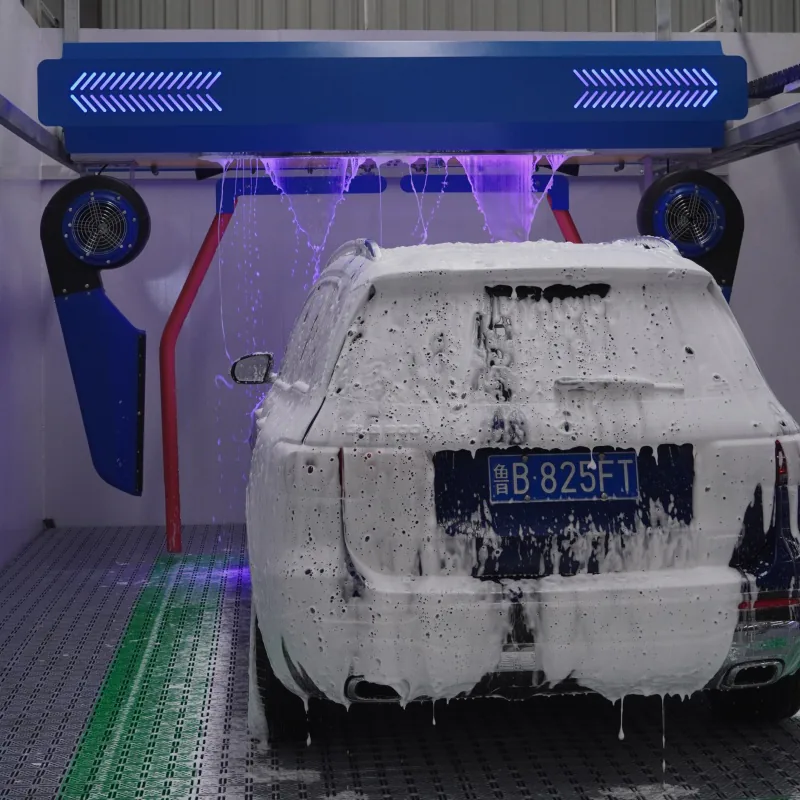
- Touchless in-bay: programmed high-pressure cleaning without wash brushes contacting the vehicle.
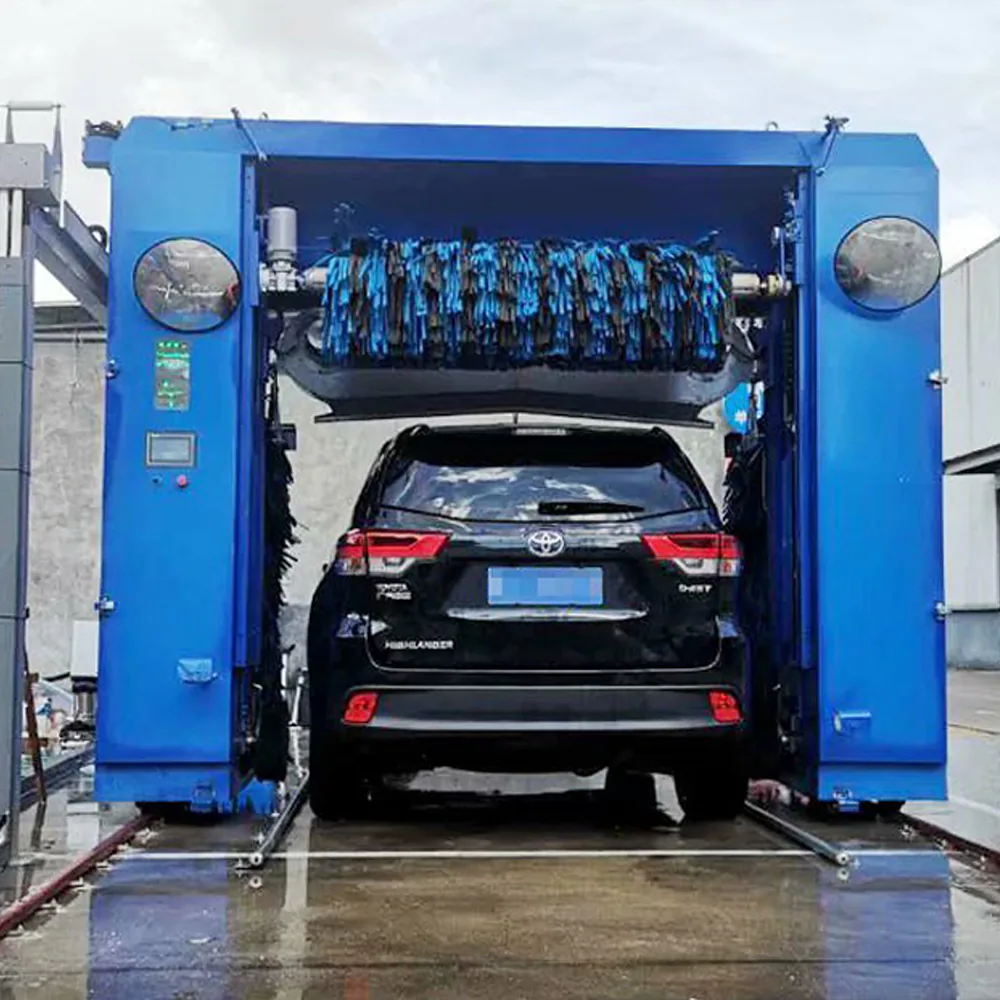
- Rollover brush: a moving gantry cleans a stationary vehicle using the configured brush, chemical, rinse and drying stages.
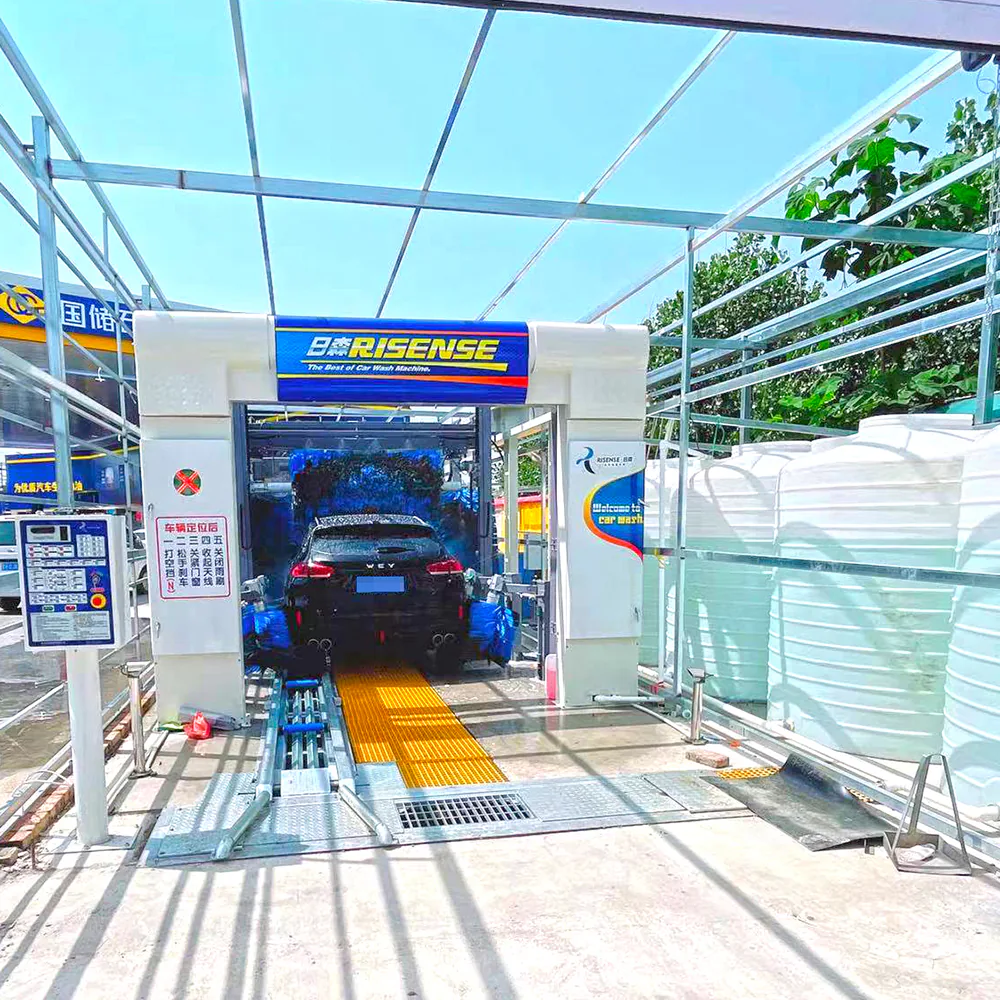
- Tunnel conveyor: a continuous layout for sites that can support longer equipment, larger civil works and sustained vehicle flow.
- Specialty equipment: purpose-built systems for a defined vehicle group or operating requirement.
Do not compare model names alone. Ask for the exact revision, standard and optional wash stages, installation dimensions, vehicle clearances and utility connection data.
2. High-pressure, brush and vehicle-detection equipment
The cleaning hardware varies by machine family and model. A useful quotation should identify the installed pumps and motors, manifolds and hoses, moving spray components, brush package where applicable, vehicle-detection method, travel limits and safety stops.
- Main high-pressure pump and motor package
- Spray arms, manifolds, nozzles and flexible connections
- Roof, side, wheel or contour brushes where applicable
- Vehicle presence, positioning or profile sensors
- Rail travel limits, emergency stops and anti-collision protection
- Protective frame finishes, fasteners and anchors
Pressure, motor power and sensor layout are model-specific. They should come from the confirmed model sheet rather than one general figure applied to every machine.
3. Chemical dosing, rinse and finish systems
Confirm each chemical channel and the equipment that supports it. Depending on the selected process, the supply may include dosing pumps, chemical suction lines, foam application, main rinse, wax or protective finish and a separate final-rinse arrangement.
- Chemical dosing pumps and controls
- Chemical tanks or connection points
- Foam application equipment and compressed-air requirement
- Main rinse and finishing stages
- Final-rinse water-quality requirement
- Compatible chemicals and local sourcing plan
Do not assume that reverse osmosis, spot-free rinse equipment or the first chemical supply is included. These items should appear explicitly in the quotation when required.
4. Car wash drying equipment
Drying configuration affects electrical demand, machine layout and the finished wash program. Confirm blower quantity and rating, fixed or contour-following nozzle arrangement, mounting hardware, ducts where applicable and control logic.
A statement such as “air drying included” is not enough to compare two systems. Request the model-specific drying package and check whether it matches the target vehicle size, wash cycle and local power supply.
5. Controls, safety and entry systems
The control package may include a PLC, HMI or other programmable controller, electrical cabinet, wash-program selection, sensor status and fault diagnostics. Confirm available languages, operator permissions, program adjustment and the process for remote technical assistance.
- Main controller and operator interface
- Electrical cabinet and protection
- Vehicle guidance and positioning signals
- Emergency stops and safety sensors
- Fault display and diagnostic access
- Network connection where remote support is agreed
RFID, card, code and payment terminals are project-specific. If unattended operation is planned, confirm the compatible interface, software responsibility, local payment provider, daily inspection and emergency-response procedure before ordering.
6. Water supply, treatment and recycling equipment
The machine needs a documented water path from source to discharge. Record water pressure, available flow, quality and storage, then confirm filtration, booster pumping, drainage and any wastewater or recycling requirements.
- Raw-water storage and booster pump where required
- Inlet filtration and water-quality treatment
- Machine feed pipes, valves and connection points
- Floor drainage, trench or pit and sediment separation
- Oil control where required by the local wastewater design
- Reclaimed-water collection, treatment, storage and approved reuse stages
- Final-rinse treatment when the selected process requires it
Read the car wash water recycling guide before assuming that all collected wash water can be reused in every stage. Local discharge rules, water chemistry, odor control and the selected wash process affect the treatment design.
7. Site infrastructure that may not be part of the machine supply
Many project costs sit outside the machine quotation. The buyer and local contractors may need to provide civil work, utility distribution and operating infrastructure.
| Local project item | Information needed |
|---|---|
| Foundation and floor | Concrete condition, thickness, level, anchors, slope and embedded services |
| Trenches and drainage | Machine drawing, drain route, sediment handling and discharge point |
| Equipment room | Pump, tank, compressor, chemical and electrical locations with service access |
| Electrical distribution | Incoming supply, transformer if required, cables, protection, grounding and isolation |
| Water and air piping | Pipe sizes, valves, pressure, compressor location and connection responsibility |
| Weather protection | Freeze protection, heating, insulation, ventilation and local exposure |
| Signs and traffic control | Queue, stop position, operating instructions, exit route and safety notices |
For a fuel retail site, review the dedicated petrol station car wash planning page, because queue and exit design must also protect access to pumps and the convenience store.
8. Packing, delivery, installation and commissioning
A complete commercial proposal should identify the packing method, package list, dimensions and weight, delivery term, destination, unloading responsibility and installation method. It should also explain whether installation is completed by a supplier technician, a local contractor with guidance or another agreed arrangement.
- Packing list and shipment dimensions
- Incoterm, destination and freight responsibility
- Unloading, lifting equipment and storage before installation
- Installation drawings and pre-installation checklist
- Installation labor, travel and local contractor responsibilities
- Pre-start inspection, calibration and trial washes
- Operator and maintenance training
- Acceptance and handover records
Review YOLO’s delivery, installation and after-sales support process and confirm the project-specific scope in the final quotation.
9. Spare parts, consumables and technical documents
Plan the first operating period before the machine ships. Request recommended commissioning and operating spares, expected lead times, consumable references and the reorder process.
- Commissioning spare parts
- Recommended operating spare-parts package
- Nozzles, hoses, seals and other wear items applicable to the model
- Brush or drying-system service items where applicable
- Electrical and sensor spares recommended for local stock
- Installation, operating, maintenance and troubleshooting manuals
- Electrical, pneumatic, water and foundation drawings
- Technical-support contact and issue-reporting process
10. Information needed for an accurate car wash quotation
Send the following information before asking suppliers to finalize the equipment list:
- Company, country and project destination
- Business type and planned operating model
- Dimensioned site or bay plan with current photographs
- Entry, exit, turning path and queue arrangement
- Expected vehicles per day and peak hour
- Maximum vehicle dimensions
- Preferred wash type, or a request for selection advice
- Local voltage, frequency, phase and available capacity
- Water source, pressure, flow, quality, storage and drainage
- Wastewater or recycling requirements
- Payment or entry integration requirement, if any
- Target opening date and current project stage
How to compare commercial car wash equipment quotations
Compare the same boundary of supply. A lower machine-only price may exclude the air compressor, water treatment, electrical work, freight, installation, commissioning or spare parts needed to open an operating site.
- Align the exact machine type and wash stages.
- Separate standard equipment from options.
- List every buyer and local-contractor responsibility.
- Compare delivery terms and destination costs.
- Confirm installation, commissioning and training scope.
- Review spare-parts availability and technical support.
- Use verified model sheets rather than general marketing figures.
Commercial car wash equipment list FAQ
What equipment is needed for an automatic car wash?
A project normally needs the automatic wash machine, cleaning and drying systems, controls, safety devices, water and electrical connections, drainage and wastewater handling. Depending on the site, it may also require storage tanks, filtration or recycling, an air compressor, payment integration and local civil works.
Does a car wash machine price include installation?
Not automatically. Installation, technician travel, local labor, lifting equipment, accommodation, commissioning and civil work should be shown explicitly in the quotation.
Is water recycling equipment always required?
The requirement depends on local wastewater rules, water availability, operating goals and the selected wash process. The treatment design must state which wash stages can use reclaimed water and which require a different water quality.
Can entry and payment systems be added?
Compatible entry or payment interfaces may be available for some configurations. Confirm the hardware, software, local payment provider, network and integration responsibilities rather than assuming that RFID, card or PIN equipment is standard.
Request a model and equipment recommendation
Send your site plan, expected vehicle volume, largest vehicle, local utilities and operating model. YOLO Car Wash Systems can help narrow the equipment options and prepare a project-specific quotation.