Adding an automatic car wash to a fuel station can create a second reason for drivers to visit the site, but the machine should not be selected before the property, traffic flow, utilities and local approval path have been reviewed. In Brazil, the most suitable project is not necessarily the largest machine. It is the system that fits the available bay, expected demand and operating model without interfering with fuel sales or creating an unsafe vehicle queue.
This guide explains how fuel-station owners and investors can plan an automatic car wash in Brazil, from the first site check through equipment selection and quotation. It is a commercial planning guide, not legal or engineering advice. Environmental, building, fire-safety, drainage and operating requirements must be confirmed with the competent authorities and qualified local professionals for the state and municipality where the project will operate.
Start with the site and operating target—not with a machine model. A useful supplier recommendation should be based on the available space, vehicle flow, expected cars per day, local utilities and required wash experience.
Is an automatic car wash suitable for your fuel station?
A car wash is more likely to fit a station when vehicles can enter, wait, wash and leave without crossing fuel-delivery routes, blocking pumps or creating a queue on the public road. Before requesting equipment prices, evaluate the complete customer journey.
- Demand: How many existing customers could realistically use the wash, and when are the peak periods?
- Space: Is there enough clear length, width and height for the machine, vehicle positioning and maintenance access?
- Vehicle flow: Can drivers understand where to enter, wait and exit without reversing into active traffic?
- Utilities: Can the site provide the required electrical supply, water, drainage and other services for the selected configuration?
- Operations: Will the wash be attended, partially unattended or integrated with a code, card or other access system?
- Approvals: Can the proposed wash activity and civil works be accepted under the applicable licenses and local rules?
If one of these points is unresolved, the project is not ready for final equipment approval. The fuel-station car wash solution provides a useful overview of the business application, while the steps below show what must be checked for a site in Brazil.
Plan vehicle flow before the wash bay
Fuel stations already combine several movements: customers entering from the road, vehicles approaching pumps, fuel-tanker access, convenience-store parking and vehicles leaving the property. A new wash lane adds another route and usually a queue. That route should be drawn before the machine layout is finalized.
A preliminary vehicle-flow drawing should show:
- Property entrance and exit
- Fuel-pump islands and canopy columns
- Fuel-tanker circulation and unloading area
- Convenience-store parking and pedestrian paths
- Wash-lane entrance, queue positions and payment point
- Machine bay, technical room and maintenance access
- Drying or finishing area, when separate
- Emergency and service access
The design should also account for the largest vehicles the wash is expected to accept. Pickup trucks and SUVs may affect turning radius, entrance clearance, guide-rail spacing and sensor settings. Maximum vehicle dimensions must be confirmed against the selected machine rather than assumed from a generic passenger-car layout.
Choose the system according to the station’s operating model
Three main automatic-wash formats can be considered. The right choice depends on the site and service concept, not only on the purchase price.
| System type | Typical business fit | Planning focus |
|---|---|---|
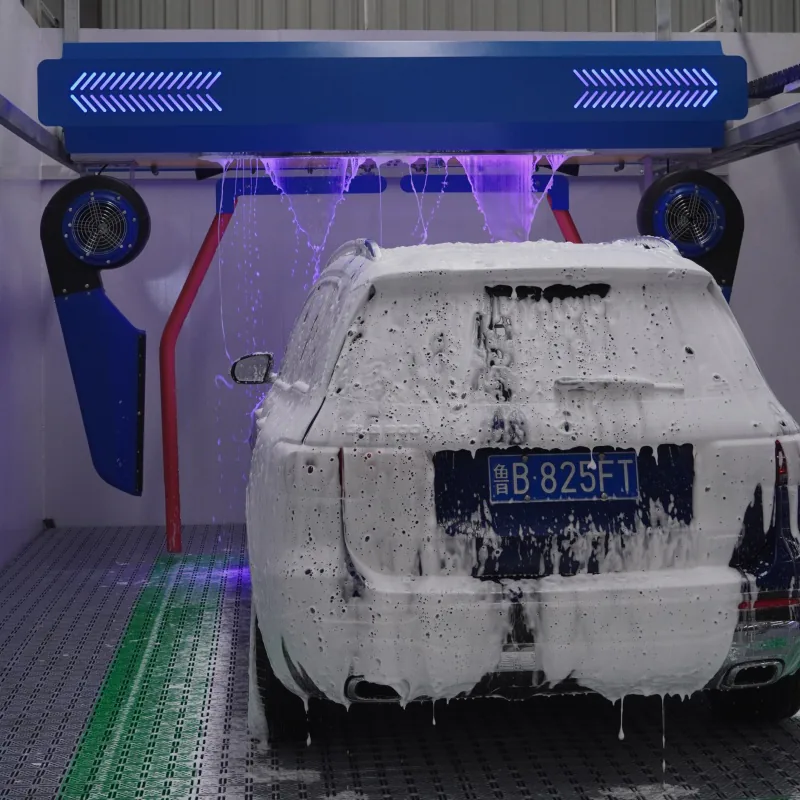
| Touchless in-bay | Fuel stations seeking contact-free washing in a compact dedicated bay | Water pressure and quality, chemical process, vehicle detection, drying and bay drainage |
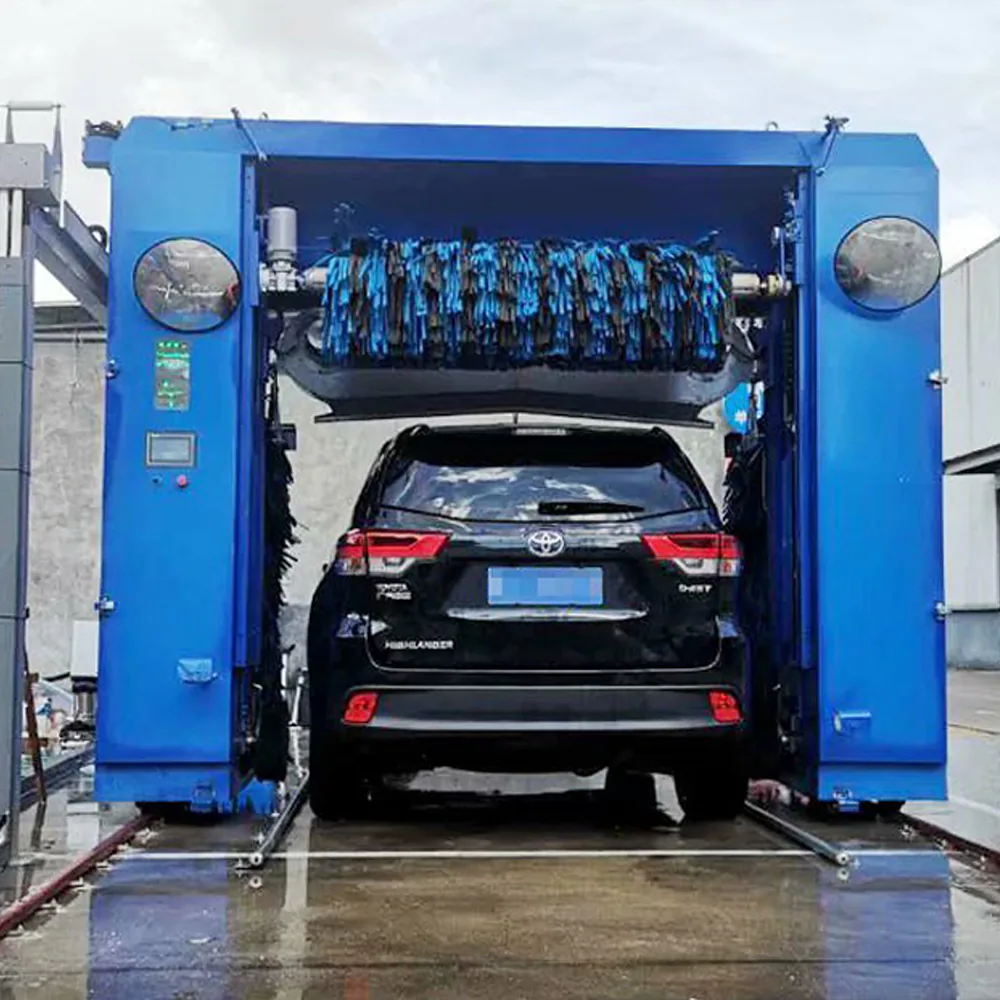
| Rollover brush | Sites that want consistent brush cleaning and visible wash action in one bay | Brush configuration, contour control, moving-equipment clearance, cleaning and wear-part maintenance |
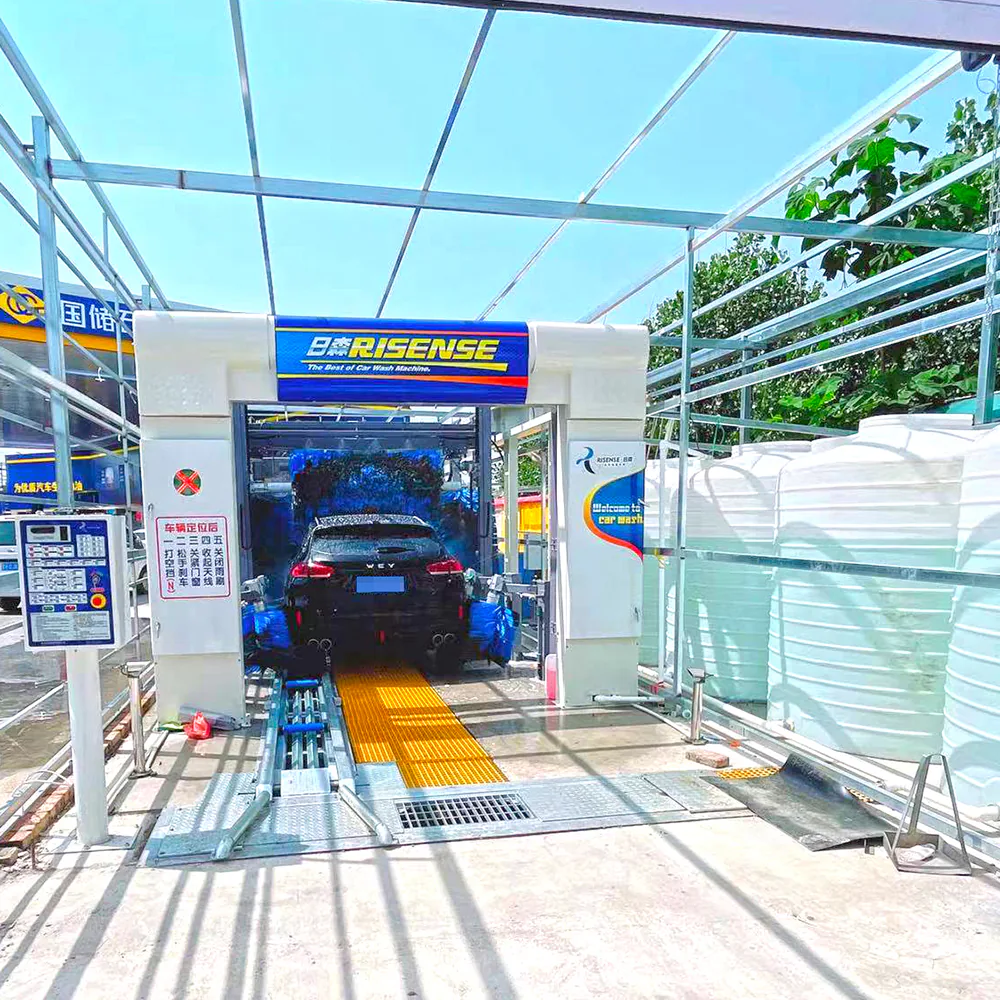
| Conveyor tunnel | Large sites with sustained demand and enough land for a continuous vehicle line | Queue capacity, conveyor and civil works, multiple wash stages, higher utility demand and exit flow |
For many existing stations, an in-bay touchless or rollover system is easier to evaluate because the vehicle remains stationary while the machine operates around it. A tunnel becomes relevant when expected peak demand, land availability and the business plan justify a continuous-flow project. Compare the current automatic car wash equipment range, but confirm the final system only after a site review.
Size capacity from peak demand, not the daily average alone
“Cars per day” is important, but it does not describe when customers arrive. A station may have a moderate daily total and still experience a concentrated queue after rain, before weekends or during specific commuting periods. Equipment selection should therefore consider both total demand and peak-hour demand.
A simple planning relationship is:
Practical daily capacity = confirmed cycles per hour × operating hours × realistic utilization factor
This is a planning framework, not a performance guarantee. Cycle time changes with the selected wash program, vehicle positioning, payment process, drying stage, staff response and equipment configuration. Ask the supplier to state the assumptions behind any capacity estimate.
Confirm the bay, civil works and technical room
The machine footprint is not the same as the complete project footprint. The site must also accommodate the approach, vehicle stopping position, doors or weather protection, equipment movement, drainage, technical equipment and safe maintenance access.
Before civil work begins, prepare a dimensioned drawing that identifies:
- Clear internal bay length, width and height
- Columns, beams, doors, curbs and wall projections
- Finished-floor level and slope
- Foundation, anchor and embedded-pipe requirements
- Drainage channels, collection pits and wastewater route
- Water, power and communication entry points
- Technical-room dimensions, ventilation and access
- Machine service zones and component-removal paths
Do not pour foundations from a generic drawing. The final civil design should be coordinated with the selected machine and reviewed by qualified local professionals. YOLO’s car wash machine installation checklist explains the site information normally required before installation.
Water supply, drainage and water reuse
Water planning should distinguish four different questions: how much water the selected wash program requires, what supply flow and pressure are available, what water quality the machine and chemicals need, and where the resulting wastewater will go. A storage tank can help manage an inconsistent supply, but it does not solve unsuitable water quality or an unapproved discharge route.
A water-treatment or reclamation system may include settling, separation, filtration and other stages selected according to the incoming contamination and intended reuse. Reclaimed water should be assigned only to stages allowed by the approved treatment design and equipment requirements. Final rinse quality, chemical performance, odor control and system maintenance must all be considered. Read the detailed car wash water recycling buyer guide before defining the treatment scope.
Requirements are not identical throughout Brazil. For example, the State of Goiás expressly requires fuel stations and vehicle-washing service companies covered by its law to install equipment for treating and reusing wash water, as well as rainwater-reuse equipment. This is a state-specific example, not a substitute for checking the rules that apply to another location.
Electrical and utility information the supplier needs
Brazilian projects should not assume that every site has the same voltage or available electrical capacity. Before the machine is configured, the buyer should obtain written confirmation of the local supply from an electrical professional or utility documentation.
- Nominal voltage and phase
- Frequency
- Available connected load and expansion capacity
- Main-panel location and cable route
- Grounding and protective-device requirements
- Voltage stability and any required protection
- Compressed-air requirements, where applicable
- Data connection for monitoring, payment or remote support
The equipment quotation should state the electrical configuration being supplied. Local distribution, protection, cabling and connection work should be designed and executed by qualified professionals under the applicable requirements.
Licensing and compliance in Brazil
A car wash added to a fuel station should be discussed with the station’s environmental and engineering advisers before equipment is ordered. Federal CONAMA Resolution No. 273 establishes environmental-licensing requirements for fuel stations. Official licensing material associated with the resolution identifies vehicle washing as an activity to be declared and asks for the average number of vehicles washed per day. In São Paulo, CETESB’s fuel-station licensing procedure also treats vehicle washing as a related activity within the licensed establishment.
The ANP regulates fuel retailing, but environmental requirements are not defined by the ANP alone. In its fuel-retailer guidance, the agency directs operators to consult the environmental authority in their state for applicable environmental-equipment requirements. Depending on the location and project, reviews may involve state or municipal environmental bodies, building and land-use authorities, the fire department, water or sewer operators and other competent entities.
For a new wash or a modification to an operating station, confirm at least:
- Whether the existing environmental license covers vehicle washing
- Whether the new bay changes the approved site plan or operating conditions
- Required wastewater collection, pretreatment, reuse or discharge arrangements
- Requirements for oil-water separation and the destination of collected residues
- Building, accessibility, fire-safety and land-use approvals
- Conditions imposed by the local water and sewer service
- Documentation and inspections required before operation
Do not treat a supplier’s equipment drawing as a Brazilian environmental or construction approval. The machine layout and the locally approved project must be coordinated, but they serve different purposes.
Decide how customers will buy the wash
The equipment is only one part of the customer experience. A station should decide whether the wash will be sold at the cashier, bundled with fuel, activated by a code, connected to a card or RFID system, or supported by an attendant. The chosen method affects lane design, signage, receipt or code delivery, network requirements and exception handling.
Before approving unattended operation, define what happens when a vehicle is positioned incorrectly, a customer enters the wrong lane, a payment is accepted but the wash does not start, or an alarm occurs. Clear instructions, intercom or telephone support, camera coverage and a safe stop procedure may be part of the operating plan.
What to send when requesting a project quotation
A complete first inquiry allows the supplier to evaluate the project instead of returning a generic machine price. Prepare the following information:
- Station address, city and state
- Site plan with available dimensions
- Current photographs and a short video of the proposed route
- Expected cars per day and peak-hour estimate
- Typical vehicle mix and maximum vehicle dimensions
- Preferred system type, if already known
- Required wash stages and drying expectations
- Confirmed voltage, phase, frequency and available power
- Water source, pressure, flow, quality and storage
- Existing drainage, wastewater and reuse arrangements
- Preferred payment or access method
- Target opening date and expected installation responsibilities
YOLO Car Wash Systems can review these details and recommend a configuration for the site. Final civil, environmental and electrical approval remains subject to the responsible Brazilian professionals and authorities. To begin, send your project information and request a recommendation.