A car wash distributor opportunity is more than permission to resell a machine. A workable partnership connects the manufacturer’s product and project support with a local company’s market access, site knowledge, installation coordination and after-sales capability. Before discussing territory or pricing, both sides should confirm what will be sold, who will perform each task and how customers will be supported after delivery.
This guide is for equipment distributors, car wash operators, automotive-equipment dealers and technical integrators evaluating an automatic car wash dealership. Here, “dealership” means a B2B equipment-sales partnership—not a passenger-vehicle dealership.
Quick decision rule: the strongest distributor is not necessarily the company with the largest contact list. It is the partner that can qualify projects, collect accurate site data, communicate technical requirements and organize reliable local service.
Who is a car wash equipment partnership suitable for?
- Automotive-equipment distributors that already sell workshop, service-station or vehicle-care equipment.
- Car wash operators that understand local operating conditions and want to expand into equipment sales.
- Installation and engineering companies with electrical, plumbing, civil-work or automation capability.
- Project integrators serving fuel stations, dealerships, parking operators, fleets or commercial property owners.
- Entrepreneurs with a defined market plan and access to qualified technical service—not simply a list of possible buyers.
A new partner does not need to begin with every product family. A focused launch around one or two systems, a clear target customer and a workable service plan is usually easier to manage than an oversized catalog.
Distributor, sales agent, project integrator or OEM partner?
| Cooperation model | Typical local role | Important point to define |
|---|---|---|
| Distributor | Develops the market, sells equipment and coordinates customer support | Product scope, territory, sales process, service and spare-parts responsibilities |
| Sales agent | Introduces and develops qualified opportunities | Lead registration, communication process and commercial responsibility |
| Project integrator | Combines equipment with local civil work, utilities, payment systems or site delivery | Interface boundaries, drawings, commissioning and final acceptance |
| OEM or private-label partner | Markets an agreed configuration under a defined branding arrangement | Brand use, documentation, configuration control and minimum commercial conditions |
These models can overlap, but the written agreement should state which model applies. Exclusivity, territory protection, order targets, discounts and private labeling should never be assumed; they are commercial terms to be evaluated case by case.
Evaluate the market before requesting a territory
A credible proposal explains where demand may come from and how the partner will reach it. Useful market evidence includes:
- target cities or regions and the practical service radius;
- priority customer groups such as fuel stations, independent wash operators, automotive dealerships, fleets and parking facilities;
- the local balance between manual washing and automatic washing;
- common vehicle sizes, climate conditions and customer wash expectations;
- water, drainage, power, construction and import constraints that affect project feasibility;
- existing sales channels, current leads and relevant industry relationships;
- competitor positioning and the service gaps a new distributor can address.
A market plan does not need inflated forecasts. A short list of real customer profiles, current conversations and local installation resources is more useful than unsupported market-size claims.
Choose a product portfolio that fits local projects
YOLO Car Wash Systems supplies three main automatic car wash categories. The right starting portfolio depends on site size, expected vehicles per day, local washing preferences, utilities, investment level and the distributor’s technical capacity.
| Product family | Typical project fit | Distributor considerations |
|---|---|---|
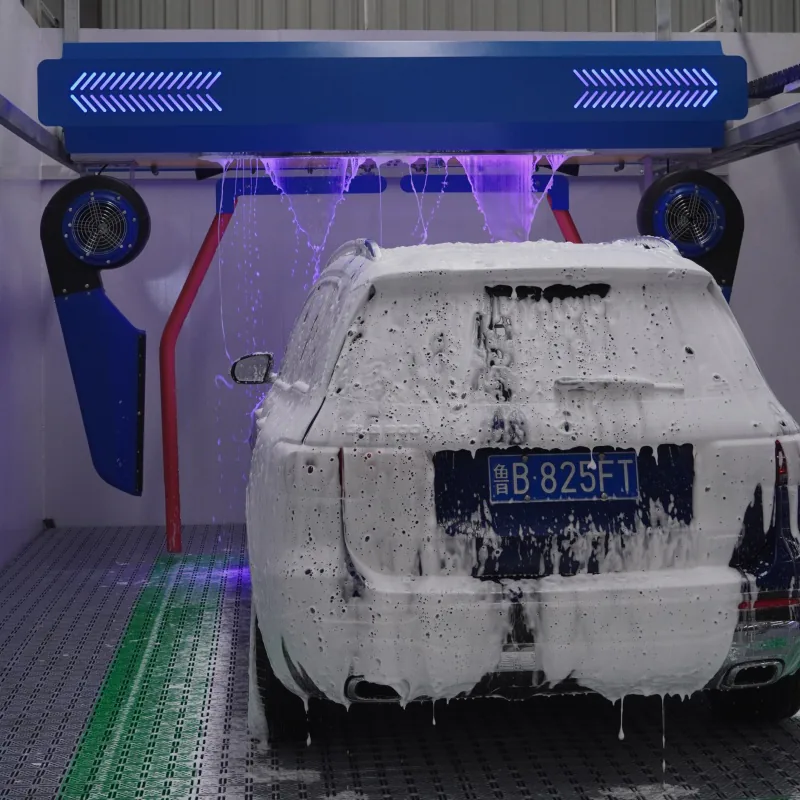
| Touchless in-bay systems | Compact sites seeking contact-free automated washing | High-pressure process, chemical setup, water treatment, drying and bay dimensions |
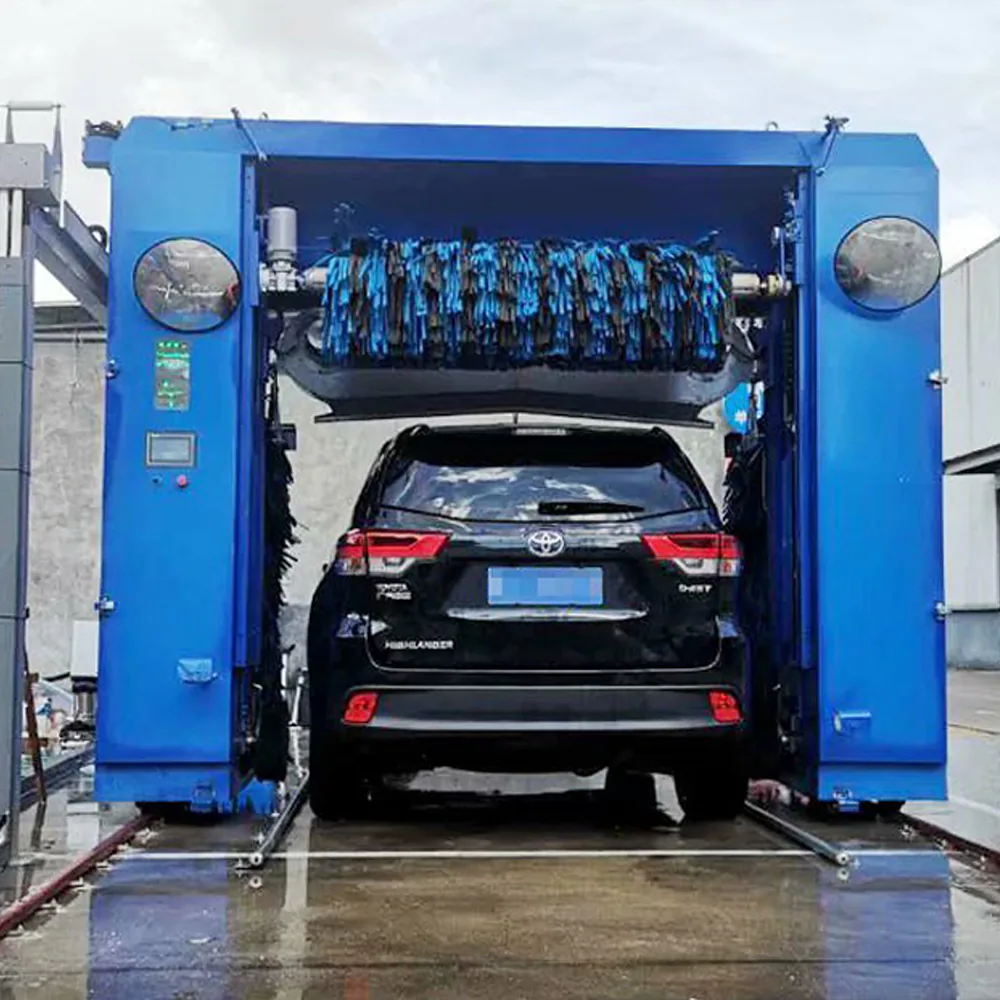
| Rollover brush systems | Sites prioritizing consistent mechanical cleaning in a compact bay | Vehicle mix, brush care, wash programs, safety checks and routine maintenance |
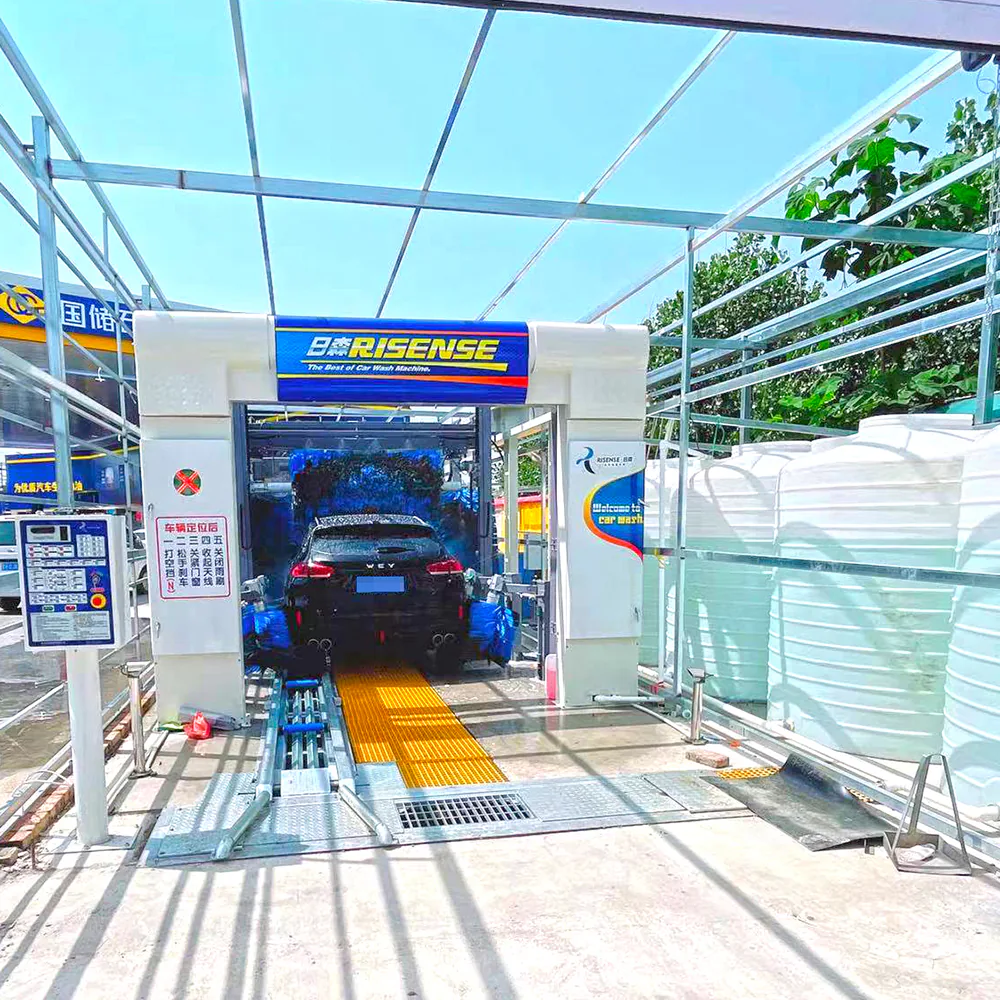
| Tunnel conveyor systems | High-throughput locations with sufficient land and traffic | Vehicle flow, conveyor layout, civil works, staffing, utilities and phased configuration |
Review the current automatic car wash product range and match each opportunity to verified site information instead of recommending a machine from price alone.
What capabilities should a car wash machine dealer build?
1. Lead qualification and site discovery
The local team should collect the customer’s business type, expected daily volume, available site dimensions, vehicle mix, local voltage and frequency, water supply, drainage, climate, preferred wash process, budget stage and intended opening date. Incomplete site information creates quotation delays and avoidable design changes.
2. Consultative sales
Commercial buyers need help comparing system type, operating model, bay or tunnel layout, utilities, optional equipment, delivery scope and local work. A distributor should explain trade-offs clearly rather than presenting every feature as essential.
3. Installation and commissioning coordination
Local civil, plumbing and electrical work often sits outside the machine supply. The distributor or integrator should be able to coordinate qualified contractors, verify that the site follows approved drawings and keep responsibilities clear before technicians arrive. See the installation and after-sales support overview for the project-support framework.
4. After-sales communication and spare parts
A dealer should define who receives fault information, how photos or diagnostic records are collected, who performs local checks and how parts are identified and delivered. Recommended spare parts, warranty scope, exclusions and maintenance schedules should be confirmed for each order instead of promised generically.
A practical responsibility matrix
| Work item | Supplier | Local distributor or integrator | Shared confirmation |
|---|---|---|---|
| Equipment selection | Configuration guidance and technical information | Customer requirements and local context | Final commercial scope |
| Site planning | Equipment and interface requirements | Accurate survey and local contractor coordination | Approved layout and utilities |
| Production and packing | Manufacturing, inspection and agreed packing | Destination and delivery information | Documents and shipment scope |
| Installation | Guidance according to the order | Site readiness, tools, labor and local compliance | Schedule and acceptance procedure |
| Training and service | Agreed technical materials and remote or on-site scope | Operators, first-line checks and customer communication | Escalation and spare-parts process |
Commercial terms to clarify before signing
- countries, regions or customer segments included in the cooperation;
- whether the arrangement is non-exclusive or subject to performance-based exclusivity;
- approved product range and rules for adding configurations;
- quotation, discount, payment and currency procedures;
- lead registration and protection process;
- brand, trademark, website, advertising and translation rules;
- demo-machine or showroom responsibilities, if applicable;
- Incoterm, shipping documents, import responsibility and delivery boundary;
- installation, commissioning, training, warranty and service responsibilities;
- recommended spare-parts stock and replenishment procedure;
- sales review, performance targets, agreement renewal and exit process.
The objective is not to make the agreement complicated. It is to prevent gaps that become expensive after the first customer signs.
A realistic first 90-day launch plan
- Weeks 1–2: define the offer. Select target segments, initial product range, internal responsibilities and required technical training.
- Weeks 3–4: build the sales toolkit. Localize approved product information, site-questionnaire forms, quotation inputs and lead-registration steps.
- Weeks 5–8: develop qualified opportunities. Approach selected operators, fuel stations, dealerships, fleets and investors; document real requirements.
- Weeks 9–12: review the pipeline. Identify which opportunities are technically viable, which objections recur and what service or documentation gaps must be resolved.
This is a planning framework, not a promise of sales results. The pace depends on local purchasing cycles, project readiness and the distributor’s existing relationships.
Information to prepare when applying
- company name, website, address and years in business;
- countries or regions currently served;
- existing product lines and customer segments;
- sales team, technical team and installation resources;
- service workshop, warehouse or spare-parts capability;
- preferred touchless, rollover or tunnel systems;
- current qualified projects or representative customer profiles;
- proposed market-development plan and expected cooperation model;
- language, voltage, documentation and local compliance requirements.
Questions both sides should ask
The distributor should ask how configurations are selected, which drawings and manuals are supplied, what training can be included, how support requests are handled and how parts are identified. The supplier should ask how the partner generates leads, conducts site surveys, supports installations, responds to faults and protects the brand.
Useful cooperation is built on evidence and clear responsibilities. Review YOLO distributor and integration solutions, see the project-planning approach, and then prepare a concise market and capability profile.