A reliable commercial car wash system price cannot be reduced to one public number. A commercial quotation changes with the equipment type, wash process, drying configuration, site utilities, destination, delivery terms and installation responsibilities.
For that reason, YOLO Car Wash Systems prepares project-specific quotations after reviewing the buyer’s site and operating requirements. This guide explains what should be included in a complete project budget, which questions to ask suppliers and how to compare quotations without confusing a machine-only price with the cost of opening a working car wash.
What determines a commercial car wash system price?
The phrase “automatic car wash machine” can describe very different systems. A touchless in-bay machine, a rollover brush machine and a conveyor tunnel do not use the same equipment layout or require the same site preparation. Even two machines in the same category may have different wash stages, pumps, chemical systems, dryers, controls and auxiliary equipment.
The final quotation can also change according to:
- The selected machine and confirmed configuration
- Standard and optional wash functions
- Maximum vehicle size and target vehicle mix
- Expected daily volume and peak-period demand
- Local voltage, frequency and electrical capacity
- Water supply, pressure, quality and wastewater arrangement
- Required drying, water-treatment and payment equipment
- Destination, packing method and delivery term
- Installation, commissioning and training responsibilities
- Spare-parts and opening-consumables scope
A useful quotation defines the equipment scope, delivery scope and local project scope—not only the machine total.
Before comparing prices, buyers should make sure each supplier is pricing the same project boundary.
Car wash system price vs complete installed project budget
A machine quotation is only one part of the investment. The complete budget should follow the equipment from selection through delivery, installation and opening.
| Budget layer | What it may include | What the buyer should confirm |
|---|---|---|
| Equipment package | Main machine, control system and stated standard components | Exact model, configuration and included functions |
| Optional equipment | Additional wash stages, drying, water treatment, payment or monitoring systems | Which items are standard and which are optional |
| Export preparation | Packing, loading and inland transport before international shipment | Packing method and named delivery point |
| International logistics | Freight and insurance when included in the agreed trade term | Route, destination, quotation validity and exclusions |
| Import stage | Customs clearance, duties, taxes, port charges and local delivery | Which party arranges and pays each item |
| Site preparation | Foundation, drainage, pipes, cables, technical room and vehicle-flow work | Local contractor scope and approved drawings |
| Installation and commissioning | Mechanical installation, electrical connection, testing and training | Remote or onsite support and local labor responsibilities |
| Opening preparation | Chemicals, common spare parts, operating procedures and staff readiness | Initial quantities, storage and replenishment plan |
This is why a lower machine-only quotation does not automatically mean a lower installed project cost. Missing items can reappear later as freight, construction, installation or operating expenses.
How equipment type changes the project scope
The equipment category is one of the first cost decisions, but it should be selected according to the business model rather than price alone. The guide on touchless, rollover and tunnel car wash systems explains the operating differences in more detail.
Touchless in-bay systems
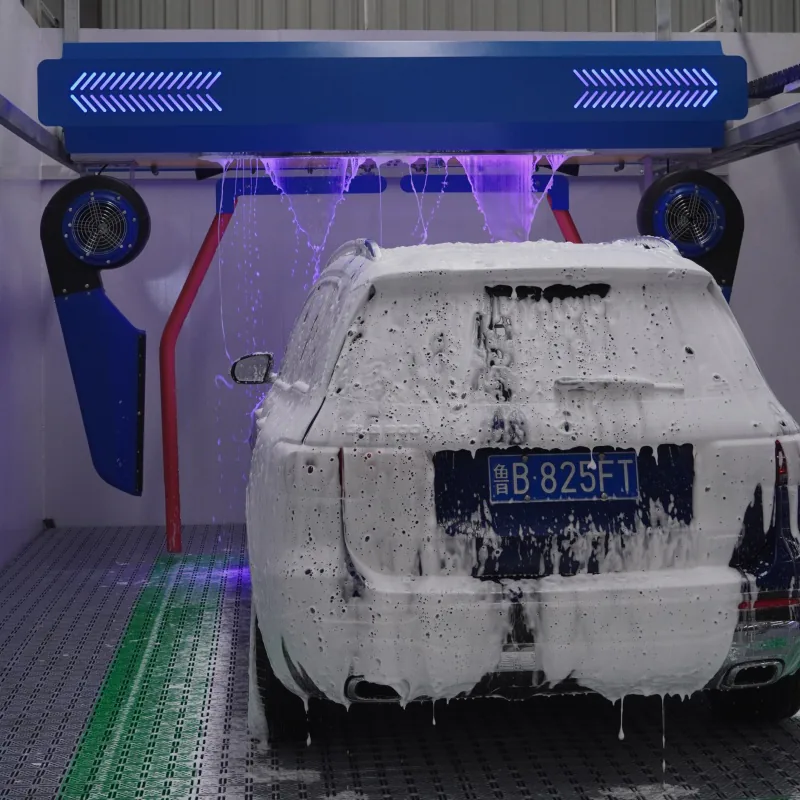
A touchless system cleans a stationary vehicle with high-pressure water and a programmed chemical process, without wash brushes contacting the body. The equipment scope may include high-pressure pumps, chemical proportioning, vehicle detection, wheel or underbody washing, coating stages and air drying, depending on the confirmed configuration.
For budgeting, confirm the complete pump and chemical system, dryer configuration, water requirements, electrical load, technical-room equipment and any unattended-payment interface. A compact machine footprint does not remove the need for safe entry, exit, drainage and maintenance access.
Rollover brush systems
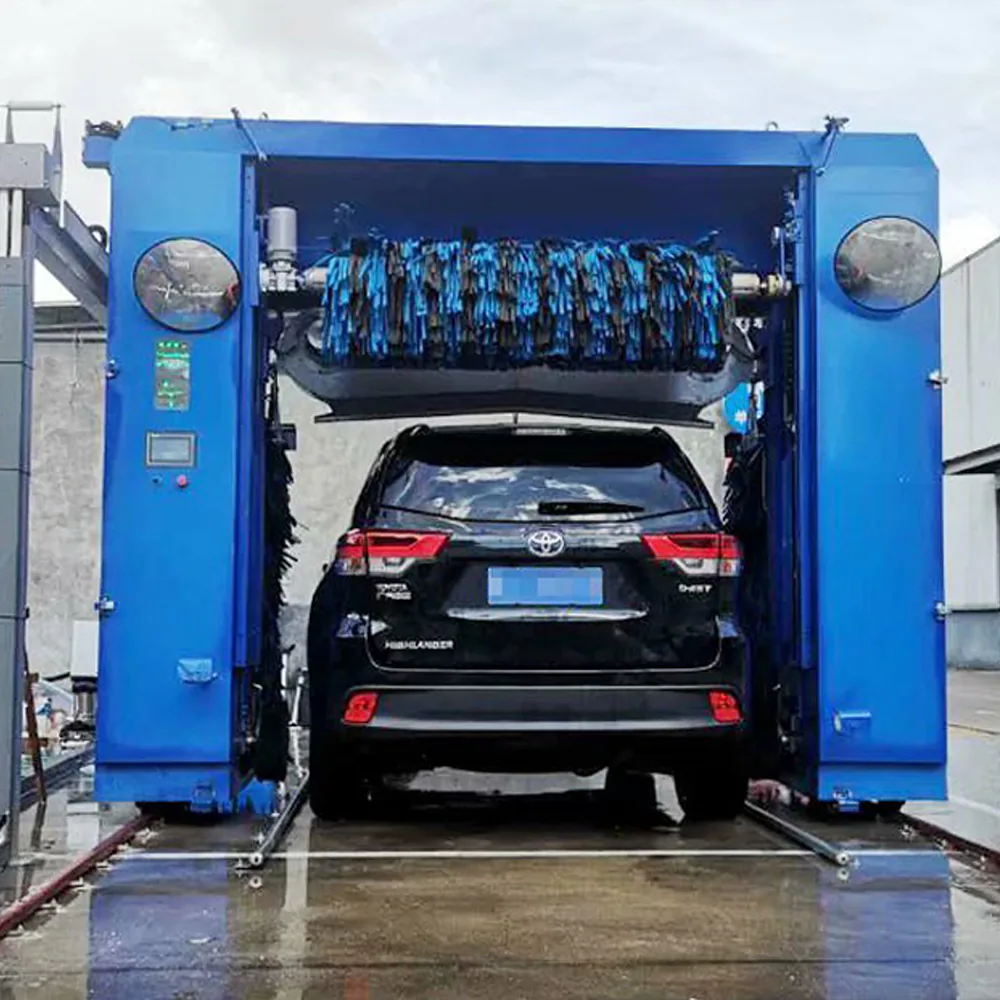
A rollover brush system also normally operates in one bay, with the vehicle stationary while the gantry moves around it. Its budget is influenced by the brush arrangement, drive and control system, wash and drying stages, safety devices and the maintenance plan for brushes and moving components.
Buyers should confirm which brushes, motors, sensors, chemical stages and dryers are included, as well as the expected inspection and replacement responsibilities. The initial machine quotation and the long-term wear-parts plan should be considered separately.
Conveyor tunnel systems
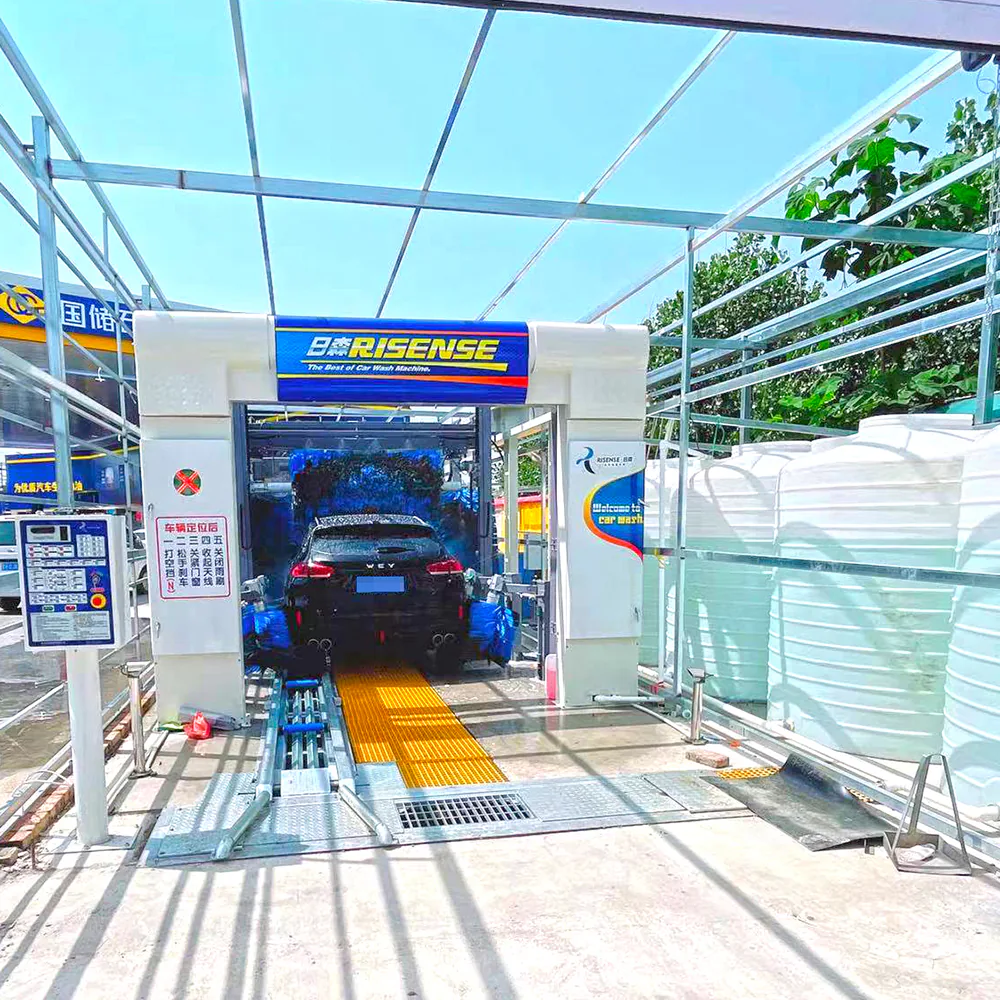
A tunnel project combines a conveyor with multiple wash, rinse, finishing and drying stages. The equipment package may cover a larger number of modules, but the project budget must also account for site length, queue and exit flow, conveyor foundation, equipment-room layout, drainage capacity and coordinated utility work.
The final scope depends on the selected tunnel layout and operating target. A tunnel should therefore be quoted from an approved configuration and site plan, not from the number of brushes alone.
Explore the current YOLO automatic car wash equipment range before requesting a project-specific comparison.
Which functions can change an equipment quotation?
Product names do not always indicate everything included in a machine. The quotation should provide a written list of standard equipment, optional equipment and excluded items.
Functions that may affect the supplied scope include:
- Pre-soak and chemical application stages
- High-foam application
- High-pressure side and contour washing
- Wheel, rocker-panel or underbody cleaning
- Rinse, wax or protective-coating stages
- Air-drying configuration
- Vehicle positioning and detection
- Safety and anti-collision systems
- Fault diagnostics and remote-support functions
- Payment, access-control or unattended-operation interfaces
- Water treatment, filtration or reclamation equipment
- Customized voltage, frequency, control language or branding
Not every project needs every option. A buyer should define the desired customer experience, local vehicle conditions and operating model first, then ask the supplier to identify the functions required to support that plan.
Site preparation and utilities belong in the budget
Equipment cannot operate independently of the building and utilities around it. Before construction, the selected system should be coordinated with an approved project drawing.
Common local works include:
- Concrete foundation, equipment anchors and embedded items
- Drainage channels, collection pits and wastewater routing
- Water inlet, storage, filtration and treatment where required
- Electrical distribution, protection, grounding and cabling
- Compressed-air supply when required by the selected equipment
- Technical-room ventilation, lighting and maintenance access
- Entrance, queue, guidance, wash-bay and exit arrangements
- Building doors, weather protection and climate-related measures
- Local permits, inspections and environmental compliance
Use the car wash machine installation checklist to collect the required site information before civil work begins.
Water handling deserves separate attention. The U.S. Environmental Protection Agency’s WaterSense guidance for vehicle washes discusses water management, operation, maintenance and reclamation considerations for commercial facilities. Requirements vary by country and municipality, so the actual drainage, treatment and discharge solution must be confirmed with qualified local professionals.
Complete project budget = equipment package + selected options + packing and logistics + import costs + civil and utility work + installation and commissioning + opening supplies + contingency
The formula is a planning framework, not a quotation. Each item still needs a named responsible party and a verified local cost.
Packing, freight and import costs
International buyers should confirm where the supplier’s responsibility ends and where the buyer’s responsibility begins. A quotation that covers equipment at the factory cannot be compared directly with one that also includes transport to a port or destination.
The quotation and sales contract should state the agreed delivery rule and named place. The ICC Incoterms® 2020 rules clarify the allocation of tasks, costs and risks between buyers and sellers for delivery, but the commercial documents still need to define the actual equipment, destination and project responsibilities.
Ask the supplier or freight partner to clarify:
- Export packing and loading method
- Inland transport to the departure point
- International freight and any included insurance
- Destination port or delivery location
- Customs documents supplied with the equipment
- Import clearance, duties and local taxes
- Port handling, storage and local delivery
- Quotation validity if freight is included
Import charges and local requirements depend on the destination. They should be checked with the buyer’s customs broker or other qualified local adviser rather than assumed from another country’s project.
Installation, commissioning and training
The words “installation included” are not sufficiently specific for a commercial equipment project. The quotation should identify what the equipment supplier, local contractor and buyer will each provide.
Confirm whether the proposed service includes:
- Foundation and utility drawing review
- Mechanical installation guidance
- Electrical and plumbing connection responsibilities
- Remote commissioning or onsite commissioning
- Travel, visa, accommodation and local transport where onsite service is required
- Local lifting equipment, tools and installation labor
- Test vehicles, water, power and chemicals for commissioning
- Operator and maintenance training
- Handover documents and fault-reporting procedure
A site that is not ready when the equipment or engineer arrives can create avoidable storage, travel and labor costs. The installation schedule should therefore be linked to verified civil-work completion and utility readiness.
Opening costs and ongoing operating costs
The purchase budget should not end when the machine starts. A practical plan should also include the first operating period and a method for tracking real cost per wash.
| Cost type | Examples to plan |
|---|---|
| Opening stock | Chemicals, filters, common spare parts and maintenance materials |
| Variable operating cost | Water, electricity, chemicals, payment fees and volume-related labor |
| Fixed operating cost | Rent, insurance, software, administration and baseline staffing |
| Maintenance | Inspection, cleaning, lubrication, wear parts and planned service |
| Downtime preparation | Troubleshooting process, spare-parts availability and technical support |
| Customer operation | Signage, vehicle guidance, payment process and complaint handling |
A simple operating model is:
Estimated monthly operating cost = fixed monthly costs + (estimated variable cost per wash × monthly wash volume) + maintenance and downtime allowance
The U.S. Small Business Administration’s break-even guidance similarly separates fixed expenses from costs that change with production or sales volume. Buyers should replace every assumption with local utility tariffs, labor costs, chemical use and operating data.
Do not base an investment decision on a supplier’s unsupported revenue or payback promise. Build conservative, target and high-demand scenarios using the same assumptions for every equipment option.
How to compare two car wash equipment quotations fairly
Place competing quotations into one comparison sheet and check each line before focusing on the total.
- Are the equipment categories and vehicle capacities comparable?
- Do both quotations list the exact standard and optional functions?
- Are pumps, dryers, controls and required auxiliary systems included?
- Are electrical specifications configured for the project destination?
- Is export packing included, and is the delivery term stated?
- Are freight, insurance, customs and local delivery included or excluded?
- Who completes foundations, drainage, pipes, cables and technical-room work?
- What installation, commissioning and training services are included?
- What initial spare parts, manuals and support procedures are supplied?
- Are warranty scope, quotation validity, payment milestones and exclusions written clearly?
The objective is not to find the lowest visible total. It is to compare two clearly defined scopes and identify what remains for the buyer to arrange locally.
If one quotation is unclear, request a revised scope before treating it as the less expensive option.
Information needed for an accurate quotation
The more complete the project brief, the more useful the equipment recommendation and quotation can be. Prepare:
- Project country, city and destination port if known
- Business type and planned operating model
- Available site or wash-bay dimensions
- Site drawing, photographs and entrance/exit direction
- Expected vehicles per day and peak-period demand
- Main vehicle types and maximum vehicle dimensions
- Preferred touchless, rollover or tunnel format
- Required wash stages and optional functions
- Local voltage, frequency, phase and available capacity
- Water source, pressure, quality and storage arrangement
- Drainage, wastewater and water-reclamation plan
- Local climate and any cold-weather or heat-related requirements
- Installation and local-contractor capabilities
- Target opening date and project schedule
- Working project budget range, if available
A budget range does not replace a technical review. It helps avoid proposing a configuration that is disconnected from the buyer’s actual investment plan.
Can YOLO provide a preliminary quotation before final drawings?
A preliminary discussion can begin with basic site dimensions, target volume, destination and preferred equipment type. However, any early quotation should be treated as a planning reference until the configuration, utilities, delivery scope and site responsibilities are confirmed.
Before construction or purchase, buyers should work from the approved technical documents for the selected system. Do not use a generic website dimension or another project’s drawing as the basis for foundations, drainage or electrical work.
For questions about delivery, installation and after-sales coordination, review YOLO installation and support.
Request a project-specific car wash quotation
YOLO Car Wash Systems supports international commercial buyers with equipment selection and project coordination backed by Shandong Boyou manufacturing. We review the intended vehicle flow, wash functions, utilities, destination and installation responsibilities before defining the quotation scope.
To begin, send your country, site dimensions, expected daily vehicle volume, local voltage, preferred machine type and project schedule. You can request a project recommendation, contact us on WhatsApp at +86 137 9289 0284, or email sales@yolowash.com.
The goal is not to issue the fastest generic price. It is to prepare a quotation that can be compared, planned and reviewed against the real project.