An automatic car wash project should be planned as a complete operating system, not as a machine purchase. This toolkit helps buyers organize the commercial target, vehicle demand, site, utilities, wash process, project budget, supplier scope and delivery responsibilities before committing to equipment.
Use it for a new retail wash, gas-station project, dealership, fleet facility or replacement installation. Complete each worksheet with the people responsible for operations, construction, electrical work, water and wastewater, import, installation and local approvals. Final requirements must follow the selected equipment, approved drawings and applicable local rules.
A reliable project starts with verified inputs. Do not select a machine from price, appearance or advertised capacity before confirming the vehicles, site, utilities and operating model.
Project planning sequence
- Define the business objective and project team.
- Estimate normal and peak wash demand.
- Record the vehicles the system must accept.
- Survey the site, traffic path and available space.
- Verify power, water, drainage, air and environmental conditions.
- Shortlist a suitable wash architecture.
- Define the required wash process and control method.
- Issue the same project brief to every supplier.
- Compare complete scope and installed project cost.
- Approve drawings, responsibilities and site readiness before production and installation.
Worksheet 1: Project definition
| Planning field | Project entry | Decision affected |
|---|---|---|
| Project country and city | ________________ | Climate, logistics, standards and local work |
| Business type | Retail wash / gas station / dealership / fleet / other | Customer flow and operating priorities |
| Project stage | Concept / site selected / design / procurement / replacement | Required level of detail |
| Operating model | Attended / unattended / mixed | Payment, access, staffing and safety procedures |
| Primary objective | Revenue / customer service / fleet availability / capacity | Equipment and program selection |
| Target opening date | ________________ | Design, production, shipping and installation schedule |
| Project decision team | ________________ | Technical, commercial and construction approvals |
Write one short project statement after completing the table. For example: “The project requires an automatic wash for passenger cars and SUVs at an existing gas station, with a defined peak operating window and an unattended payment option.” Keep the statement factual and leave the machine model open until the site and vehicle data are reviewed.
Worksheet 2: Demand and practical throughput
Daily vehicle traffic is not the same as wash demand, and theoretical machine capacity is not the same as completed washes. Record the expected number of customers or fleet vehicles during normal periods and the busiest operating window. Include payment, approach, positioning, washing, drying, exit, occasional rewash and downtime in the operating assessment.
| Demand input | Normal case | Peak case | Evidence or assumption |
|---|---|---|---|
| Potential vehicles per day | ______ | ______ | Traffic count, fleet schedule or comparable operation |
| Expected wash conversion | ______ | ______ | State how the estimate was developed |
| Operating hours | ______ | ______ | Planned opening schedule |
| Peak arrivals per hour | ______ | ______ | Arrival profile rather than daily average |
| Target completed washes per hour | ______ | ______ | Include entry and exit assumptions |
| Expected program mix | ______ | ______ | Basic, premium, fleet or heavy-soil programs |
| Acceptable on-site queue | ______ vehicles | ______ vehicles | Must not block roads or other operations |
For a new business, prepare conservative, expected and higher-demand cases. For an existing operation, use measured arrivals, cycle times, downtime and rewash records. Do not justify a larger system with unsupported market-volume claims.
Worksheet 3: Vehicle compatibility register
List the actual vehicle groups the site intends to wash. Record the body dimensions and external items that may affect sensing, movement or cleaning, including mirrors, roof racks, antennas, light bars, rear steps, spare wheels, spoilers and commercial accessories.
| Vehicle group | Share or quantity | Maximum L × W × H | External equipment | Typical soil and required result |
|---|---|---|---|---|
| Passenger cars | ______ | ______ | ______ | ______ |
| SUVs and pickups | ______ | ______ | ______ | ______ |
| Vans | ______ | ______ | ______ | ______ |
| Special fleet vehicles | ______ | ______ | ______ | ______ |
Attach clear front, side, rear and roof-area photographs of unusual vehicles. Separate the building opening from the equipment’s approved vehicle envelope. Buses and heavy trucks generally require purpose-designed systems rather than a passenger-car machine placed in a larger room.
Worksheet 4: Site and vehicle-flow survey
Measure the complete working volume and traffic path, not only the proposed machine footprint. Provide a dimensioned site plan, a building section, current photographs and a video following the vehicle route from the property entrance to the exit.
| Site item | Information required | Project entry |
|---|---|---|
| Available wash bay | Clear internal length, width and height | ______ × ______ × ______ |
| Door opening | Clear size, tracks and raised-door position | ______ |
| Fixed obstructions | Columns, beams, pipes, lights, ducts and wall projections | ______ |
| Existing floor | Concrete condition, levels, slopes, pits and trenches | ______ |
| Approach | Road width, turning path, alignment and driver guidance | ______ |
| Queue | Vehicles retained without blocking roads, pumps or parking | ______ |
| Exit | Safe merge, inspection and optional finishing area | ______ |
| Equipment room | Location, size, access, drainage and ventilation | ______ |
| Maintenance clearance | Access for inspection and component removal | ______ |
Mark the lowest overhead point and narrowest usable width. Confirm that the largest vehicle can enter, align, stop and leave without unsafe reversing or crossing the incoming queue. Leave room for maintenance even when the machine itself fits inside the building.
Worksheet 5: Utilities and environmental conditions
| Utility or condition | Data to verify | Measured value or source |
|---|---|---|
| Electrical supply | Voltage, frequency, phase, available capacity and earthing | ______ |
| Water supply | Source, pressure, available flow, storage and reliability | ______ |
| Water quality | Hardness, sediment, dissolved solids and treatment needs | ______ |
| Wastewater | Discharge point, permitted flow and treatment requirements | ______ |
| Compressed air | Pressure, flow, dryness and local supply responsibility | ______ |
| Climate | Temperature range, freezing, heat, dust, salt and corrosion | ______ |
| Communications | Internet or mobile coverage for payment and remote support | ______ |
Use measured values where possible. Attach laboratory water results, utility-provider information and photographs of existing connection points. If water reuse is planned, define which wash stages may use treated water and which require a different water quality.
Worksheet 6: Wash architecture shortlist
| Architecture | Often considered when | Questions to resolve |
|---|---|---|
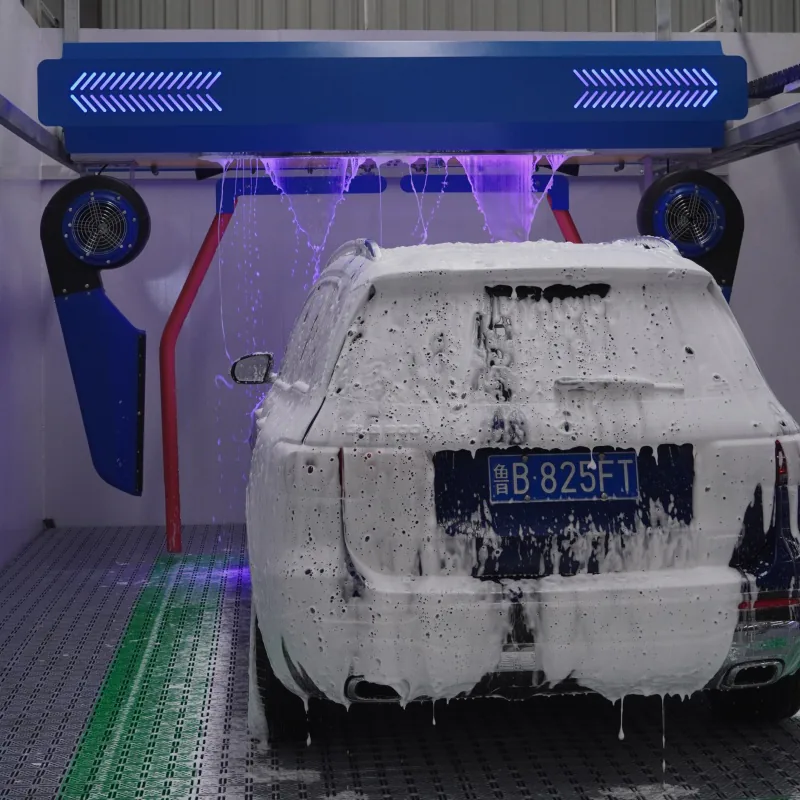
| Touchless in-bay | Contact-free cleaning, configurable high-pressure programs and compact automatic operation are priorities | Vehicle geometry, chemical process, pressure, drying, water treatment and practical cycle |
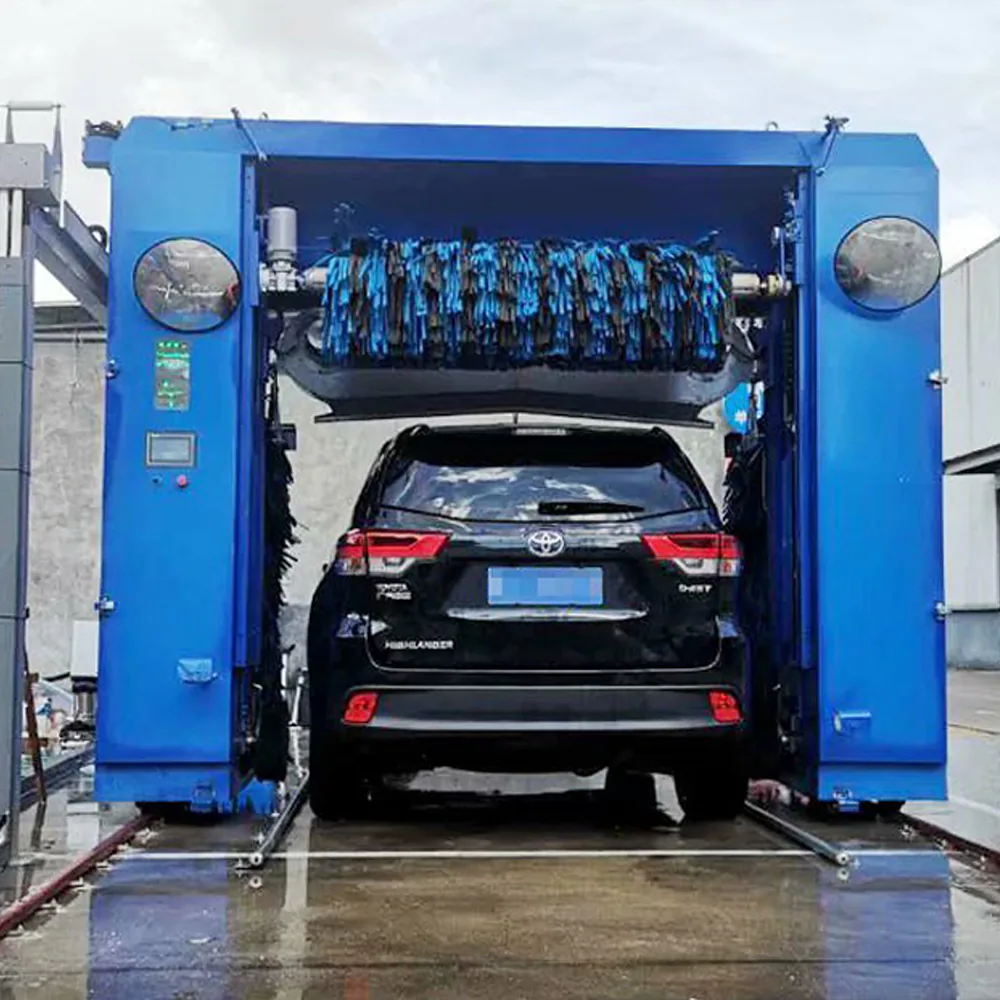
| Rollover brush | Consistent mechanical cleaning is required in a compact automatic bay | Brush material, contour control, vehicle accessories, drying and service access |
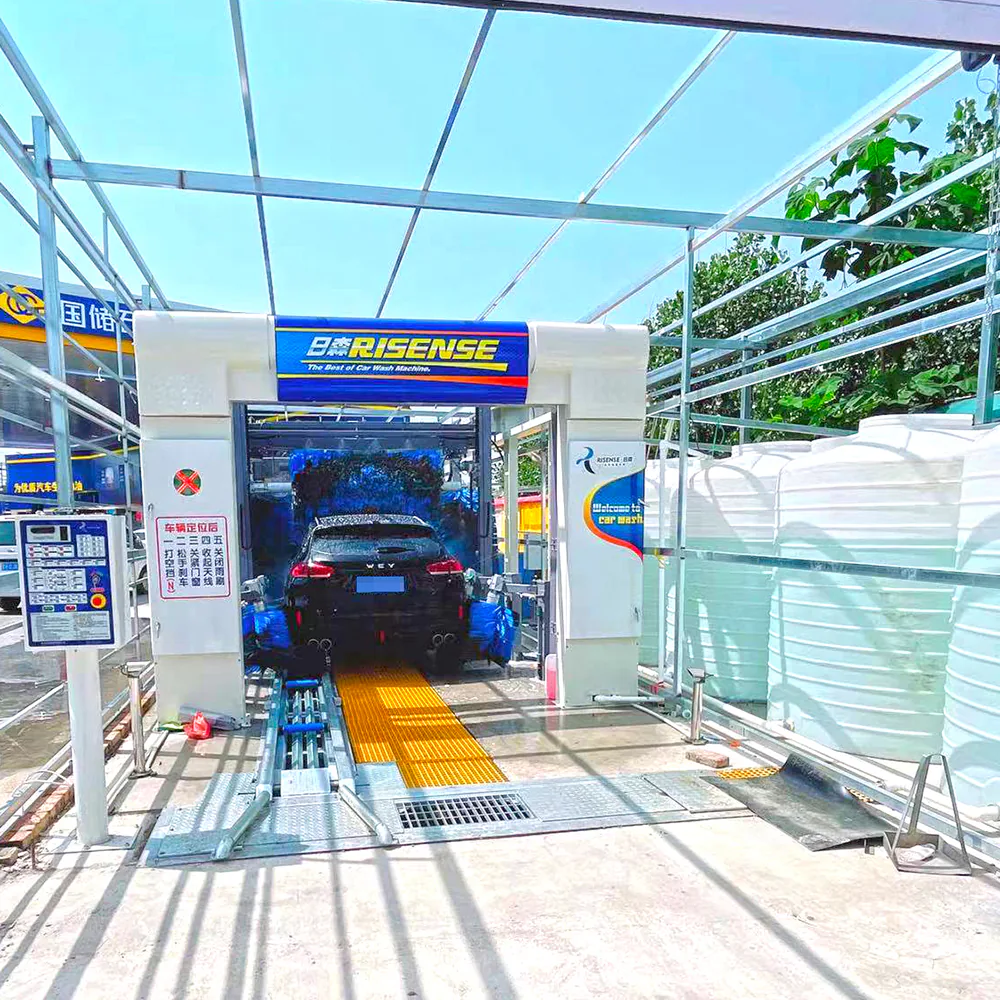
| Conveyor tunnel | Continuous vehicle flow and higher sustained site throughput are required | Site length, loading, conveyor operation, modules, staffing, queue and exit |
Shortlist only systems compatible with the verified vehicles, practical demand, site and utilities. A compact footprint does not automatically mean a complete project requires little space, and a high theoretical capacity does not solve a restricted entrance or exit.
Worksheet 7: Wash process and controls
Mark each function as required, optional or not needed. Connect every requirement to the vehicle mix, soil, expected finish or operating method rather than copying a competitor’s feature list.
- pre-soak or multi-step chemical process;
- high-pressure body cleaning;
- wheel and rocker-panel cleaning;
- chassis or underbody cleaning;
- brush cleaning where applicable;
- high-pressure and spot-free rinse stages;
- wax or protectant application;
- drying arrangement and expected result;
- vehicle detection and anti-collision protection;
- payment, RFID, access code, staff activation or unattended control;
- interface language, diagnostics and operating records.
Worksheet 8: Comparable quotation table
| Comparison item | Supplier A | Supplier B | Supplier C |
|---|---|---|---|
| Model and configuration revision | ______ | ______ | ______ |
| Approved vehicle envelope | ______ | ______ | ______ |
| Included wash and drying stages | ______ | ______ | ______ |
| Auxiliary equipment and water treatment | ______ | ______ | ______ |
| Controls, payment and localization | ______ | ______ | ______ |
| Packing, Incoterm and destination | ______ | ______ | ______ |
| Installation, commissioning and training | ______ | ______ | ______ |
| Warranty basis and exclusions | ______ | ______ | ______ |
| Recommended spare parts | ______ | ______ | ______ |
| Excluded or unconfirmed items | ______ | ______ | ______ |
Issue one written project brief to all bidders. Resolve differences in configuration, delivery basis and buyer-side work before comparing totals. Treat an early price without confirmed site and vehicle data as a budget indication rather than a final project quotation.
Worksheet 9: Complete project budget
| Budget group | Estimate | Source or owner |
|---|---|---|
| Wash equipment and options | ______ | Equipment quotation |
| Packing, freight and insurance | ______ | Supplier and freight forwarder |
| Customs, duties, taxes and port charges | ______ | Local customs adviser |
| Building, foundations, drainage and civil work | ______ | Local contractor |
| Power, water, air, treatment and communications | ______ | Local contractors |
| Unloading, lifting and installation | ______ | Agreed responsibility |
| Commissioning, travel and training | ______ | Supplier quotation |
| Initial chemicals, consumables and spare parts | ______ | Operating plan |
| Permits, professional fees and contingency | ______ | Project team |
The machine price is only one budget line. Record the currency, quotation validity, payment stages, delivery term and assumptions behind every estimate. Keep taxes and import costs under review with qualified local advisers.
Worksheet 10: Responsibility matrix
| Deliverable | Equipment supplier | Buyer or local contractor | Due date |
|---|---|---|---|
| Approved layout and foundation drawings | ______ | ______ | ______ |
| Civil work and utility readiness | ______ | ______ | ______ |
| Manufacturing and factory testing | ______ | ______ | ______ |
| Packing, freight and import documents | ______ | ______ | ______ |
| Unloading, storage and lifting | ______ | ______ | ______ |
| Mechanical and electrical installation | ______ | ______ | ______ |
| Commissioning and acceptance tests | ______ | ______ | ______ |
| Training, manuals and spare parts | ______ | ______ | ______ |
Approval gates before opening
- Concept approval: business objective, site and demand assumptions accepted.
- Technical approval: vehicles, architecture, programs and utilities confirmed.
- Drawing approval: layout, foundations, drainage and connections released for construction.
- Production release: configuration, commercial terms and responsibilities signed.
- Site readiness: civil work, utilities, access and local installation team verified.
- Commissioning acceptance: safety, movement, wash programs, controls and documentation checked.
- Operating review: initial wash quality, consumption, maintenance and faults reviewed after launch.
Do not start foundations from an unapproved concept drawing, and do not release production while vehicle, power, water or responsibility questions remain open. Record drawing revisions and accepted changes throughout the project.
Supplier-ready project package
- completed project-definition and demand sheets;
- vehicle register with dimensions and photographs;
- dimensioned plan, building section, site photos and route video;
- verified power, water, drainage, air and climate information;
- required wash process and operating method;
- delivery destination and target schedule;
- preferred responsibility split for site work, installation and training;
- commercial requirements and quotation deadline.
Send the same package to every supplier and retain written clarifications with the final contract. This makes technical scope, cost and implementation risk easier to compare.
Discuss your project with YOLO Car Wash Systems
YOLO Car Wash Systems supplies commercial touchless in-bay, rollover and tunnel car wash systems and supports buyers with equipment selection, layout review, project coordination, installation guidance and after-sales communication.
- Website: yolowash.com
- Products: Automatic car wash systems
- Project support: Installation and after-sales support
- Email: sales@yolowash.com
- WhatsApp: +86 137 9289 0284