Traffic and queue
Map the entry, waiting position, bay approach and exit so wash traffic does not block fuel pumps, tanker access or the convenience store.
Language available
You can switch language while staying on the corresponding page.
Suggestion based on approximate location.
Automatic car wash for fuel retail sites
Plan a compact commercial car wash around forecourt traffic, bay dimensions, utilities, expected demand and the way the site will be operated.
Get a Project RecommendationDirect answer
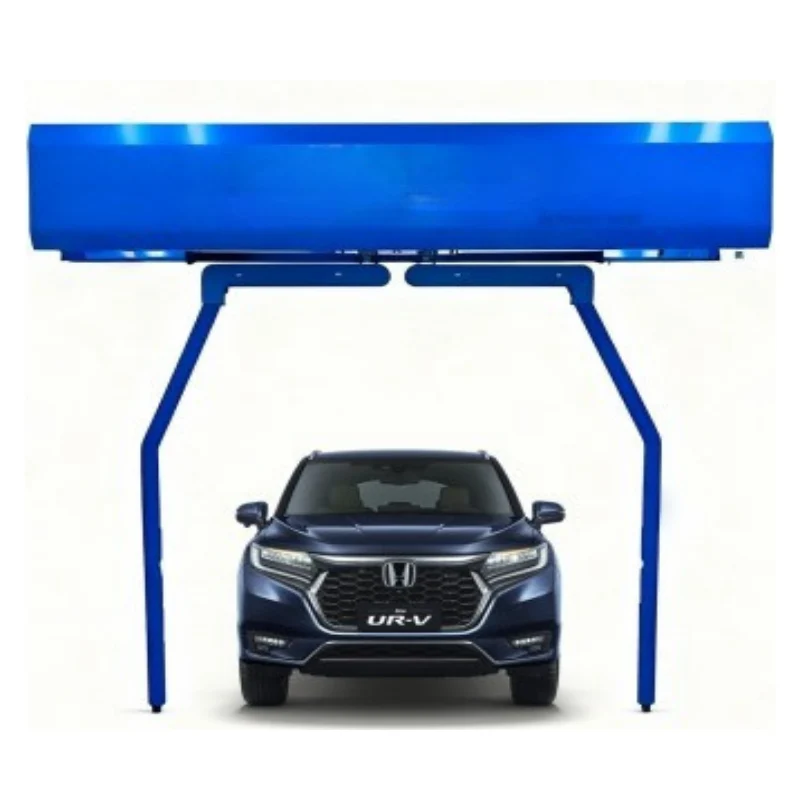
A touchless or rollover machine can add a wash service without requiring the footprint and conveyor layout of a tunnel. The right choice depends on usable bay dimensions, vehicle flow, local utilities, wash demand and whether the operation will be staffed or unattended.
The machine should be selected only after the fueling lanes, store access, entry queue and exit path have been checked together. A compact machine is not a good fit if the wash queue obstructs pumps or creates an unsafe turning movement.
Project fit
A petrol station car wash must work as part of the whole site, not as an isolated equipment purchase.
Map the entry, waiting position, bay approach and exit so wash traffic does not block fuel pumps, tanker access or the convenience store.
Confirm usable length, width and clear height, plus doors, columns, beams, equipment-room space and the largest expected vehicle.
Record water pressure and available flow, storage, drainage route, sediment control and any local wastewater or recycling requirements.
Confirm voltage, frequency, phase, available capacity, cable route and the planned locations of electrical and control equipment.
Estimate daily and peak-hour vehicles, customer mix, wash programs and the time available for each vehicle.
Define staffed or unattended use, payment or entry interface requirements, daily inspection, chemical refilling and local service capability.
System selection
Match the wash format to the business and site instead of choosing by headline price alone.
Uses programmed high-pressure cleaning without wash brushes contacting the vehicle. It can suit sites that prioritize contact-free operation and configurable chemical, rinse and drying stages.
Moves the gantry around a stationary vehicle and uses configured brush, chemical, rinse and drying stages. It can provide repeatable cleaning in a dedicated bay.
A tunnel is generally considered when the property can support a longer conveyor layout, larger civil works and sustained vehicle flow. It is not the default choice for a constrained forecourt.
Operating workflow
A typical workflow moves from wash selection or authorization to queue guidance, vehicle positioning, the automatic wash cycle and a clear exit. Entry and payment hardware varies by project, country and local integration scope.
Do not assume that RFID, card or PIN hardware is included. Confirm the compatible interface, software responsibilities, network requirements and local payment provider before the order is finalized.
At the store, a local terminal or another confirmed interface.
Use clear signs, signals and the machine's confirmed positioning system.
Chemical, cleaning, rinse, wax and drying stages depend on the selected equipment.
Maintain a visible route back to the road or forecourt circulation.
Quotation brief
A complete project brief reduces the risk of comparing incompatible machine-only quotations.
Dimensioned site or bay plan
Current photographs and traffic direction
Expected cars per day and peak hour
Maximum vehicle dimensions
Local voltage, frequency and phase
Water supply, drainage and wastewater rules
Preferred touchless, rollover or undecided format
Staffed or unattended operating plan
Payment or entry integration requirements
Target project timeline and destination
Buyer questions
There is no universal model. Compact touchless and rollover systems are common starting points, but the correct format depends on the bay, traffic flow, wash demand, utilities, customer expectations and service plan.
It may be possible when the property has enough space for the bay, queue and safe exit, and when water, power, drainage, wastewater and local approval requirements can be met.
Some configurations can support unattended operation, subject to the confirmed safety system, compatible entry or payment interface, local monitoring, daily inspection and emergency procedures.
The equipment type, wash stages, pumps, drying package, water treatment, control integration, destination, civil work, installation scope and local utilities all affect the complete project quotation.
Your next step
Share your dimensions, expected vehicle volume and local utilities. We’ll help you evaluate a suitable configuration.